Strategic Analysis
Strategic Analysis
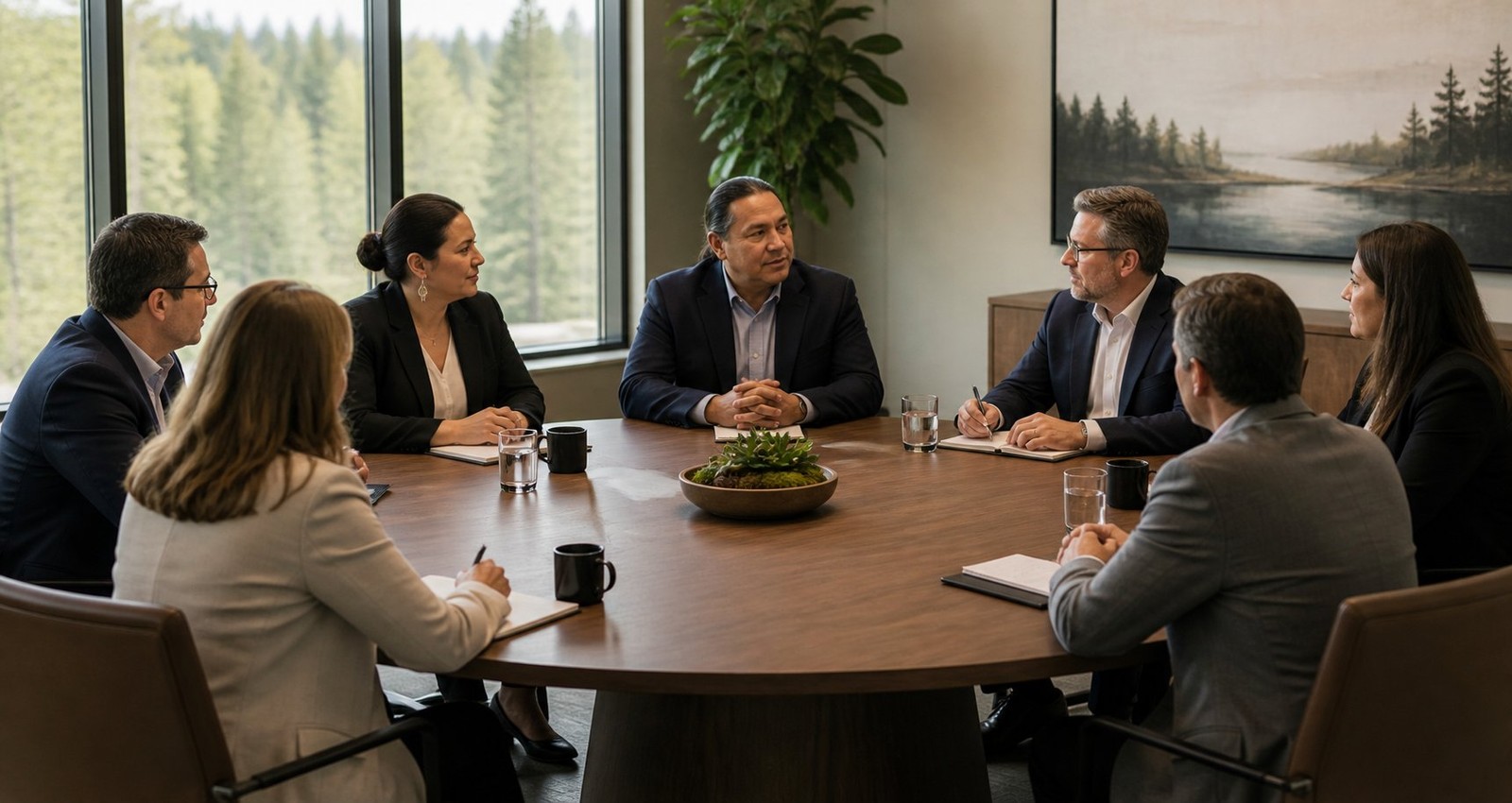
Prime Minister Carney and Alberta Premier Smith are meeting today in Ottawa to work through the details of their landmark energy and environment MOU — a deal that is moving slowly but moving nonetheless. What is less discussed is that Indigenous participation is written directly into the framework. For Nations whose territories intersect with this negotiation, the time to build your position is now, while the terms are still being shaped.
The Memorandum of Understanding signed by Carney and Smith in Calgary on November 27, 2025 is a framework for enhanced energy collaboration, regulatory reform, and — critically — Indigenous partnership. The deal pairs the prospect of a new tidewater pipeline connecting Alberta oil to BC's northwest coast with a series of environmental measures including industrial carbon pricing and methane emissions reduction commitments.
Four key arrangements were due by April 1, 2026. Agreements in principle have been reached on two — methane emissions standards and project assessment processes. Carbon pricing levels and an agreement with the Oil Sands Alliance remain unresolved. Smith's office has set a July 1 deadline to submit pipeline plans to the federal Major Projects Office.
The pace has frustrated both industry and environmental groups. What is important for Nations to understand is that this slower pace is not a setback — it is a window. Every week these negotiations continue is a week during which Indigenous voices can be brought to bear on how the framework is ultimately structured.
The MOU's Indigenous participation commitment is not incidental — it reflects the legal and political reality that no major energy corridor in western Canada can proceed without meaningful Indigenous engagement. The proposed pipeline would cross territories in Alberta and British Columbia where Nations hold treaty rights, Aboriginal title, and constitutionally protected consultation rights.
The federal government's own Major Projects Office framework — which governs how this pipeline would be reviewed — includes specific provisions for early and meaningful Indigenous engagement. Nations that establish their position clearly and early in that process carry more weight in the final outcome than those who engage later.
The ongoing negotiation between Ottawa and Alberta creates a specific dynamic that Nations with interests in this corridor can use to their advantage. Both governments need Indigenous support — or at minimum the absence of Indigenous opposition — to advance this project. That gives Nations with well-prepared positions a form of leverage that is most powerful right now, before the terms are locked.
The unresolved items — carbon pricing levels, the Oil Sands Alliance MOU, project assessment details — are precisely the areas where Indigenous governance interests intersect most directly. How emissions from projects on Indigenous territories are priced, how assessments are conducted, and what benefits flow to communities are all questions that Nations should have clear positions on before negotiators finalize the framework.
Nations with territories along the proposed corridor, in the resource extraction zones, or in areas affected by downstream environmental impacts all have a legitimate stake in how this deal is structured. The strongest position is one that is developed proactively — grounded in the Nation's own priorities and governance framework — rather than reactively in response to what the two governments have already decided.
We are tracking the MOU negotiations and the Major Projects Office timeline. If your Nation has territory, rights, or interests in the Alberta or BC energy corridor, we can provide an early read on where the process stands and how to build your position.
The Opportunity
For Nations with territories, rights, or economic interests connected to this energy corridor, having clarity on your own position and governance readiness is useful information as this process unfolds. Tuvvik is monitoring the MOU negotiations and the Indigenous participation commitments within them. If understanding the consultation landscape or the current state of those commitments would be useful to your Nation, we welcome the conversation.
Want a specific read on how the Carney-Smith MOU affects your Nation's territory or interests? Contact Tuvvik Strategies and we can walk through your position and help you identify the right moments to engage.
Stay connected to signals that matter for your Nation.
Tuvvik Strategies monitors federal policy, funding programs, and governance developments across Canada. Choose how you want to stay informed.
Sources: Hill Times Politics This Morning May 8 2026, The Canadian Press March 31 2026, Lethbridge Herald May 5 2026, MLT Aikins December 5 2025, The Globe and Mail November 27 2025, Major Projects Office — Canada.ca.