VIA Rail has signed a $4.7-billion agreement with Alstom for 313 passenger cars and long-term technical support. The award moves Buy Canadian from procurement policy into a national industrial delivery program—and fixes the renewal path for services that connect hundreds of communities outside the Québec City–Windsor Corridor.
What changed
The agreement covers approximately $4 billion for 313 Adessia passenger cars and nearly $700 million for a 15-year technical-support and spare-parts arrangement. Design and engineering will take place in Saint-Bruno-de-Montarville, carbody manufacturing in La Pocatière and final assembly in Thunder Bay.
The cars will serve VIA Rail’s eight long-distance, regional and remote routes across eight provinces. The federal backgrounder says those services connect nearly 400 communities, including 93 Indigenous communities without another public surface-transportation option. The first cars are expected to enter commercial service in 2031, with full deployment expected by 2035.
This is no longer an early procurement signal. A supplier has been selected, the agreement is signed and the work now moves into design, supplier planning, manufacturing and phased deployment.
The Tuvvik analysis
The immediate significance is the conversion of industrial policy into contracted demand. The federal Buy Canadian framework now sits behind a multi-year order with defined Canadian design and manufacturing locations, a stated intention to maximize Canadian steel and an existing Alstom network of more than 900 Canadian suppliers.
That does not mean every supply-chain opportunity is open today. The public materials do not identify work packages, qualification requirements, procurement schedules or a supplier intake. The practical opportunity will depend on how Alstom tiers the work, which capabilities remain unallocated and when potential suppliers can satisfy technical, quality, insurance and delivery requirements.
The agreement also joins industrial capacity to service continuity. Its eight routes are not simply tourism products: on portions of the network, passenger rail is essential transportation. A delivery delay, service-design choice or transition issue can therefore carry different consequences in remote communities than it would in a corridor with several alternatives.
For Indigenous Nations, the public announcement establishes neither a common position nor an automatic commercial pathway. It does not disclose Nation-specific engagement, consent, ownership, procurement commitments or community-level service arrangements. Those questions remain distinct and should be addressed with the Nations concerned, on their own terms and through the appropriate relationships.
The strategic window is nevertheless real. With design beginning before cars enter service in 2031, the next several years may shape supplier participation, workforce preparation, accessibility, remote-service requirements and the operational transition from equipment averaging roughly 77 years old.
What leaders may choose to consider
- Map relevant manufacturing, fabrication, maintenance, logistics and professional capabilities against likely work packages rather than assuming a general supplier opening.
- Track Alstom and VIA Rail qualification requirements, procurement notices and supplier-engagement channels as design moves forward.
- For Nations served by the routes, separate service priorities and rights or governance questions from any potential contracting or workforce interests.
- Assess whether workforce, certification and production investments can be timed to the 2031 entry-into-service target and the 2035 full-deployment horizon.
- Watch how Canadian-content commitments are translated into contract administration, supplier selection and public reporting.
What to watch next
The next useful signals will be detailed design milestones, disclosure of supplier or work-package opportunities, Canadian-content reporting, manufacturing schedules and any formal engagement concerning service design in the communities the routes serve. Delivery performance will matter as much as the award: the cars are to enter service progressively alongside the existing fleet, making transition planning central to continuity.
Primary Sources
Prime Minister of Canada — VIA Rail fleet investment announcement
Transport Canada — Fleet investment backgrounder
Alstom — Signed VIA Rail agreement and delivery scope
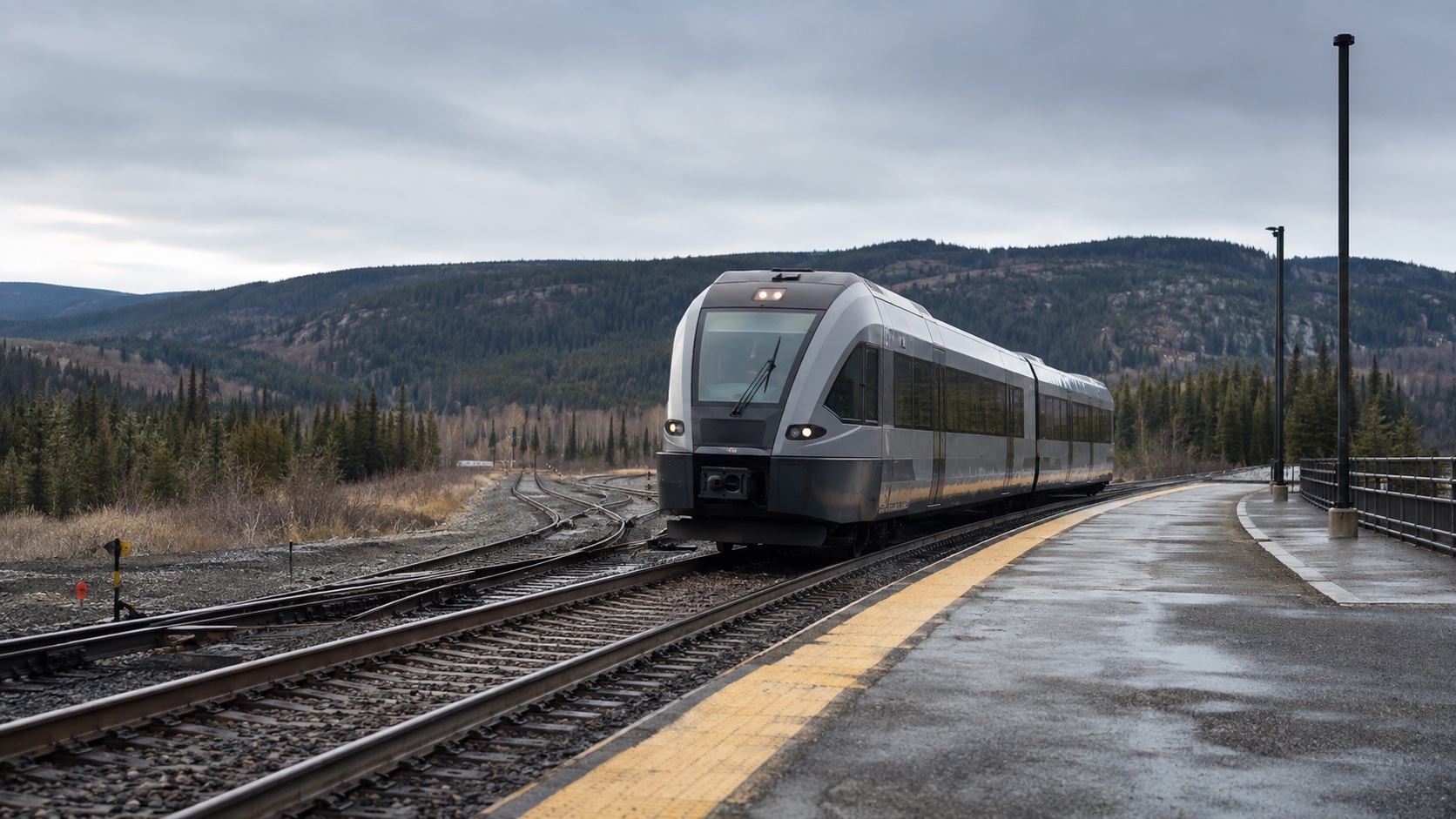
Image: Representative northern passenger-rail scene; not VIA Rail’s future Alstom fleet or a specific community.
See what is changing. Understand what matters. Be ready to act.
Tuvvik helps organizations assess emerging procurement and infrastructure activity, clarify the decisions ahead and build credible pathways from early signal to implementation.
Start a Conversation